
The short version
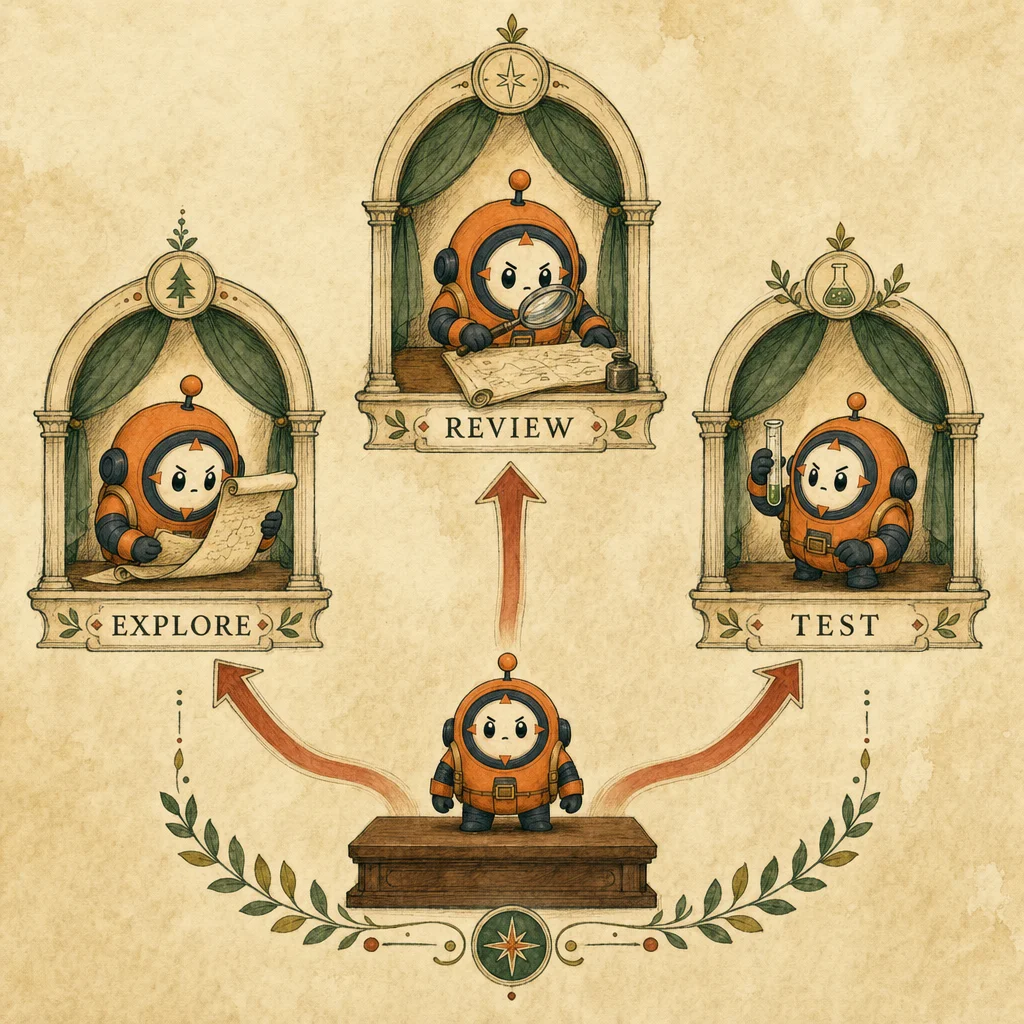
Subagents are independent Claude instances with fresh context windows. CLAUDE.md is a local filesystem convention the parent session reads at startup; it is never transmitted to spawned subagents. To make a subagent respect your project rules, inject a distilled convention block into its system prompt or first turn on every spawn. Centralize the block in one template so updates propagate without hand-editing five agent definitions. On the CCA-F exam this surfaces under D1 and D3 as scenario stems where a subagent breaks a stated rule and you must name the missing inheritance step.
The silent rule-dropping bug
A code-review subagent shipped a PR that violated three of our project rules in one pass: it added a server-side import to a client file, used a forbidden API, and renamed a public export. Each rule was clearly written in CLAUDE.md. The reviewer returned a clean summary and approved the diff. The bug was not the reviewer; it was the assumption that CLAUDE.md is ambient. It is not. The reviewer never saw a single rule because none had been injected into its context. This is the most common multi-agent bug in production Claude Code pipelines and it is silent - the subagent does not warn you it is missing rules, it just operates without them.
The context window guide illustrates the risk: "Coordinator delegates with full 150KB case context expecting inheritance. Subagent wastes 100KB on irrelevant history. Fix: coordinator extracts a 2KB TASK_CONTEXT and passes only that. Subagent has 198K for actual research." The same principle applies to CLAUDE.md - except the default is not 150KB of garbage, it is zero KB of rules.
How parent context is built, why subagents miss it, and what to inject
When Claude Code starts in a project directory, it loads CLAUDE.md in a defined order. The CLAUDE.md hierarchy guide describes this order: "(1) reads user ~/.claude/CLAUDE.md (personal defaults); (2) reads project root .claude/CLAUDE.md or root CLAUDE.md (shared); (3) while editing a file, checks all .claude/rules/*.md files, tests the paths glob against the filename, and loads matches. All loaded content is concatenated and injected as context into Claude's system prompt." This is a one-time, parent-session filesystem operation.
A subagent does not repeat that operation. The Skilljar Introduction to Subagents course (Lesson 1) is explicit: "Each one runs in its own conversation context window... The intermediate steps - all the file reads, searches, and tool calls - stay in the subagent." The flip side is also true: anything the parent loaded into its own context is not visible to the subagent unless the parent explicitly passes it in the spawn message.
The fix has three layers. First, identify the rules that govern the subagent's task class - if it is a reviewer, the relevant rules are review standards and anti-patterns; if it is a styler, design tokens and component patterns. Second, extract those rules into a convention block, typically 10-30 lines. Third, inject the block at spawn time. The Skilljar Lesson 4 quote nails the intent: "This separation also lets you encode project-specific review standards in the subagent's system prompt, ensuring consistent review criteria across the team." The catch: that encoding does not happen automatically. You write it.
A minimal injection pattern looks like this:
# subagents/reviewer.md
---
name: reviewer
description: Code review subagent for this project
---

# Project convention block (mirror of CLAUDE.md §Code Style + §Anti-Patterns)
- Server-side imports never appear in app/ or components/.
- Named exports only; no default exports in lib/.
- Type hints required on every function (mypy strict).
- Reject any PR that adds a NEXT_PUBLIC_*KEY* variable unless it is a publishable key.

# Specialized review criteria
- Run git diff first.
- Flag every violation of the block above before commenting on style.
- Cite the violated rule by section so the human can verify.
Three things matter about that snippet. The convention block is scoped to what a reviewer needs - not the full CLAUDE.md. It is labeled as a mirror of CLAUDE.md so a future maintainer knows where the source of truth lives. The specialized criteria reference the block directly, which gives the subagent a closed loop: rule, check, citation. Without that structure the subagent treats the rules as advisory and ignores them under load.
For a multi-subagent pipeline (one orchestrator, four specialists), build a shared template loader. The orchestrator reads CLAUDE.md once, slices it into per-role blocks (reviewer block, styler block, security block, docs block), and injects the appropriate slice on each spawn. This costs one file - the loader - and prevents the failure mode where five subagent definitions each carry their own stale copy of the rules. Treat the rules like code: one source, many consumers, never hand-copied.
Six steps to bulletproof inheritance
- Catalog which rules each subagent class needs. Reviewers need anti-patterns; stylers need design tokens; security subagents need the secrets boundary. A subagent does not need the rules of a class it never executes.
- Distill a per-class convention block from CLAUDE.md. 10-30 lines, scoped to the task class. Label it as a mirror so future maintainers find the source.
- Inject the block at the system-prompt layer when possible.System prompts cache; first-turn injections do not. Across many spawns this is a real cost saving.
- Reference the block from the subagent's task instructions.Tell the subagent explicitly to check the block before producing output, not to treat it as background context.
- Centralize block storage in one file or loader. Hand-copying guarantees drift. One source, many consumers.
- Verify on every meaningful CLAUDE.md change. Re-run a known scenario through each subagent class after editing the rules. A silent regression here is invisible until production catches it.
Five failures we keep seeing
- Ambient assumption. "The subagent will read CLAUDE.md because it's in the directory." Cause: confusing parent-session behavior with subagent behavior. Fix: treat injection as the only propagation mechanism.
- Full-file dump. Injecting the entire 500-line CLAUDE.md into every spawn. Cause: avoiding the work of distillation. Fix: scope blocks to the task class; let unused rules stay in the parent.
- Hand-copied blocks. The same convention block pasted into five subagent definitions. Cause: no loader. Fix: one file, one source; every subagent reads from the same template.
- Background-context tone. Block injected but the subagent told "here are some guidelines" instead of "check this before output." Cause: weak prompt structure. Fix: make the block a hard constraint, with the cite-on-violation pattern in §The mechanics.
- Path-scoped rule blindness. A scoped rule in .claude/rules/*.md that auto-loads in the parent never reaches the subagent that triggers it. Fix: inject scoped blocks explicitly when spawning a subagent that will touch matching files.
How this shows up on the exam
Sources and further reading
- Context Window Management — further reading on this site.
- CLAUDE.md Hierarchy — further reading on this site.
- What are subagents? — Introduction to subagents (Anthropic course; enrollment may be required).
- Using subagents effectively — Introduction to subagents (Anthropic course; enrollment may be required).
- Subagents — further reading on this site.