

What this system is, and its 4 parts
Before a delivery lead does any actual work with Claude, there's a quieter decision that shapes everything downstream: which Claude product, and which model tier, actually fits the task. A quick one-off question and a recurring client-facing workflow that touches sensitive documents are not the same job, and treating them the same wastes either time or budget, sometimes both. This scenario exists because "just use Claude" is not a decision, it's a shortcut that skips the one judgment call that determines whether the rest of the workflow is even set up correctly. Everything below is how to make that first call well.
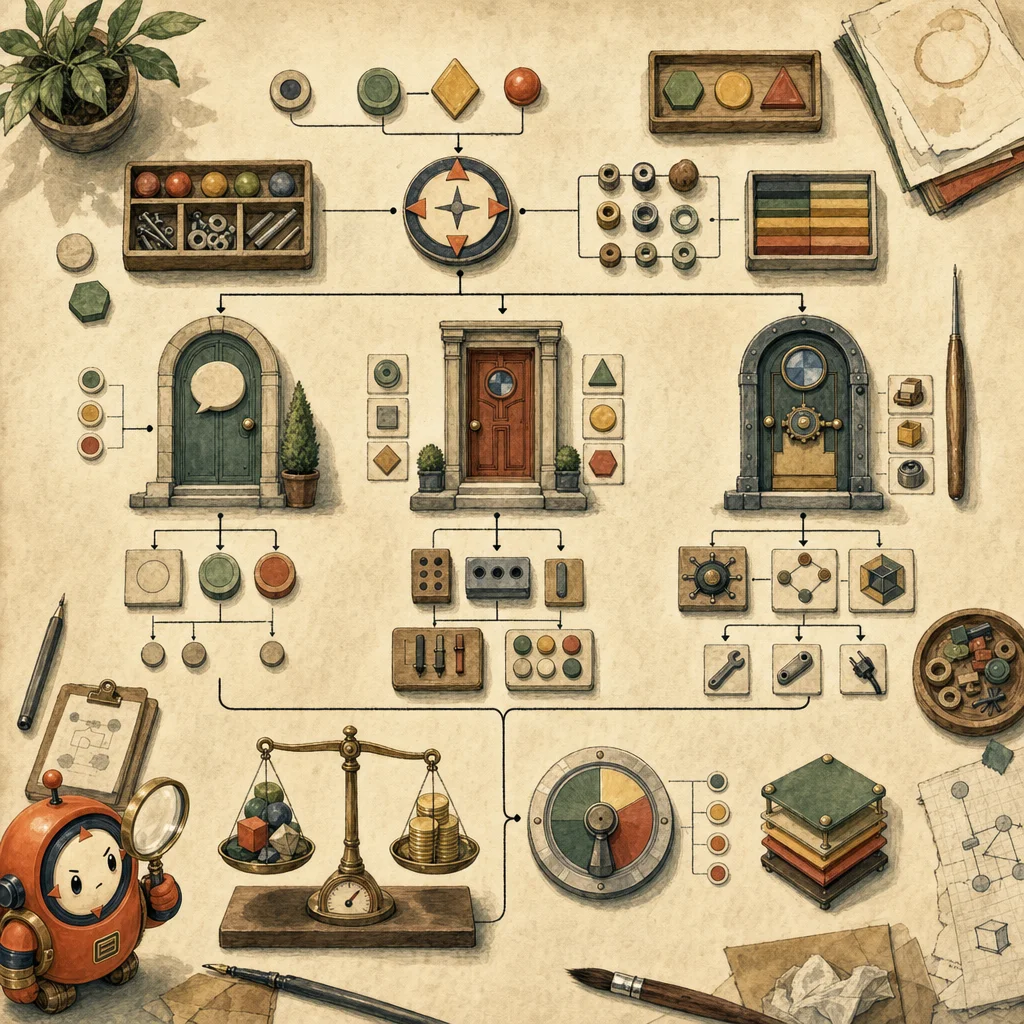
Task Profile
the three questions that actually matterBefore touching any product, answer three things about the task: is it one-off or recurring, does it need persistent shared knowledge, and what's the cost of a wrong or slow answer. These three answers, not preference, drive the rest of the decision.
ConfigurationOne-off + low stakes + no shared knowledge needed = a plain chat. Recurring + shared team knowledge = a Project. Embedded in a client-facing product or high-volume automated flow = an API-backed tool your organization built.Concept: claude-product-feature-selection →
Product Tier Match
chat vs. Project vs. built toolclaude.ai chat is for one-off, exploratory, or personal-scope work. A Project is for recurring work that needs the same source documents and instructions available every time, shared across a team. An API-backed internal tool is for high-volume or embedded use cases someone on the engineering side has already built for you, you're a user of it, not a builder.
ConfigurationAsk: will three colleagues need this same context next month? If yes, a Project. Will this run the same way a hundred times a day inside another product? If yes, it's already (or should be) an API-backed tool, not a manual chat habit.Concept: claude-product-feature-selection →
Model Tier Match
not "the best one" by defaultFaster, lighter model tiers handle routine drafting, summarizing, and formatting well and cheaply. Higher-capability tiers earn their cost on genuinely hard reasoning, nuanced judgment calls, or high-stakes deliverables where an error is expensive. Most day-to-day delivery work does not need the top tier.
ConfigurationRule of thumb: routine and low-stakes defaults to the fast/cheap tier. Ambiguous, high-stakes, or reasoning-heavy work justifies the top tier. When unsure, start at the lighter tier and escalate only if the output falls short, not the other way around.Concept: model-selection-tradeoffs →
Cost-Stakes Tradeoff Check
the two-minute gut checkA short, explicit pause before committing: does the value of getting this right justify the extra cost and time of the higher tier or richer product? For most routine tasks the answer is no. For a handful of genuinely high-stakes deliverables, the answer is clearly yes, and paying for it is the correct call, not a waste.
ConfigurationTwo-minute rule: if you can't articulate why the task needs the higher tier or richer product in one sentence, default to the lighter, cheaper option.Concept: accuracy-latency-cost-tradeoffs →
The problem
- Pick a product fast enough that it doesn't become its own project, most decisions take under two minutes.
- Avoid overpaying for capability the task doesn't need, and avoid under-provisioning a task that genuinely needs more.
- Have a repeatable rule of thumb, not a fresh debate every time a new task shows up.
- Defaulting to whichever Claude product is already open in a browser tab, regardless of what the task actually requires.
- Assuming "the newest, most capable model" is always the right choice, the highest-capability tier is not free, and most tasks don't need it.
- Setting up a recurring, team-shared workflow inside a single throwaway chat, losing the work and the knowledge the moment the chat is closed.
- ✓ The chosen product matches the task's recurrence (one-off chat vs. persistent Project vs. embedded tool)
- ✓ The chosen model tier matches the task's complexity and stakes, not habit or hearsay
- ✓ The decision is made in under two minutes using a consistent rule of thumb
- ✓ The choice is revisited when the task's nature changes, not locked in forever
One run, traced end to end


5 steps to production
Ask the three task-profile questions before opening any tool
Is this one-off or recurring? Does it need shared, persistent knowledge across a team? What's the real cost if the output is wrong or slow? Answering these first prevents the default habit of "whatever's already open."
Concept: claude-product-feature-selection →Match the answer to a product tier
One-off and low-stakes goes to a plain chat. Recurring with shared team context goes to a Project. High-volume or embedded-in-another-product work should already be running through an API-backed tool your organization set up, not a manual chat routine.
Match the task's complexity and stakes to a model tier
Default to the lighter, faster tier for routine drafting, summarizing, and formatting. Reserve the top tier for genuinely hard reasoning or high-stakes deliverables. Starting light and escalating only if needed costs less than defaulting to the top tier out of habit.
Concept: model-selection-tradeoffs →Run the two-minute cost-stakes check
State, in one sentence, why this task justifies the product or model tier you picked. If you can't, you've probably over-provisioned. If you can, you've made a defensible, explainable choice, which matters when someone later asks why the workflow costs what it costs.
Concept: accuracy-latency-cost-tradeoffs →Revisit the choice when the task's nature changes
A one-off chat that becomes a weekly habit should graduate to a Project. A Project whose stakes just went up (it now feeds a client-facing deliverable) may justify a higher model tier. The decision isn't permanent, it should track the task.
8 decisions the exam turns into distractors
Everything stays in whatever chat window is already open
One-off → plain chat. Recurring, shared → a Project
The top-capability tier, out of habit or assumption
The faster, lighter tier by default
Whatever tier was used for the last unrelated task
The higher-capability tier, deliberately chosen
Keep doing it by hand in claude.ai because it already works
Belongs in an API-backed tool, not manual chat use
A recurring, team-shared research task gets redone from scratch in a fresh chat every week.
Recognize the recurrence and move the task into a Project with persistent source documents and instructions.
Routine internal summaries run on the highest-capability tier out of assumption that "best" is always right.
Default routine, low-stakes work to the faster, cheaper tier. Reserve the top tier for tasks that actually need its reasoning depth.
A client-facing deliverable with real financial stakes gets drafted on the lightest, fastest tier to save time.
Match the tier to the stakes. A genuinely high-stakes deliverable justifies the higher tier's cost and time.
A task that runs dozens of times a day continues to be done by hand in a chat window because "it already works."
Recognize the volume signal and route the task to an API-backed tool built for that scale.
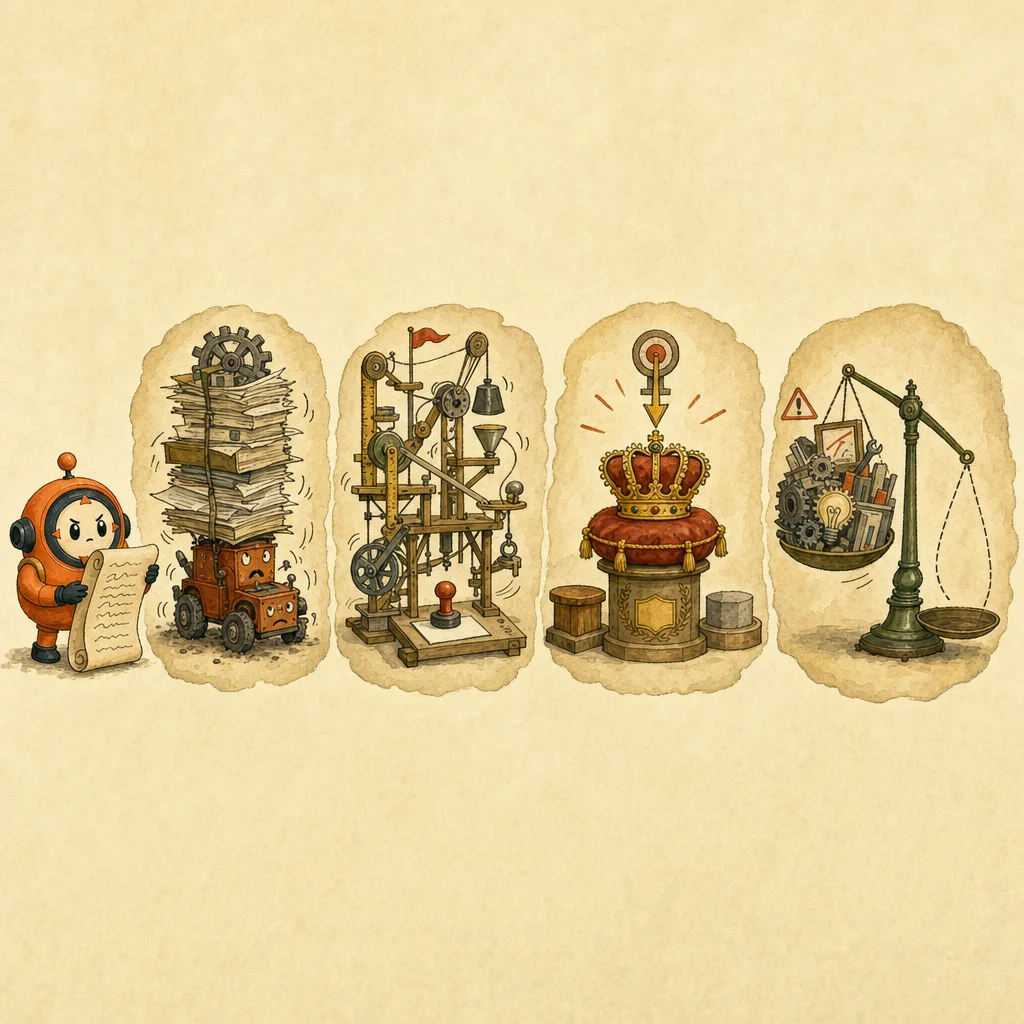
Cost & latency
The three-question task profile plus the cost-stakes check is designed to be fast enough that it doesn't become its own overhead.
Defaulting routine work to the lighter tier, instead of the top tier by habit, adds up materially across a team's day-to-day volume.
Correctly matching a high-stakes task to the stronger tier upfront avoids the cost of catching a shallow answer late and redoing it.
Moving a weekly recurring task from a fresh one-off chat into a Project eliminates the re-explaining and re-uploading tax paid every time.
Check every gate before release
5 exam-pattern questions
Work through one question at a time, check the architecture, then move through the set.
A team member drafts the same weekly client-status summary in a brand-new claude.ai chat every Monday, re-uploading the same reference documents each time. What's the better product choice?
Frequently asked
Is it ever fine to just use whatever Claude product is already open?
For a genuine one-off, low-stakes question, yes, that's exactly what a plain chat is for. The problem is doing this by default for recurring or high-stakes work where a Project or a built tool would clearly serve better.
How do I know if a task counts as "recurring" enough to justify a Project?
A rough rule of thumb: if you (or a colleague) will need the same source documents and instructions again within the next month, it's recurring enough. One clear repeat is usually the signal.
Won't defaulting to the lighter model tier hurt quality?
Not for the tasks it's meant for, routine drafting, summarizing, and formatting. The lighter tier underperforms only on genuinely hard reasoning or high-ambiguity work, which is exactly when you escalate to the higher tier deliberately.
Who decides when a manual workflow should become a built, API-backed tool?
That's an engineering/product decision, not something a delivery practitioner builds themselves. Your role is to recognize the volume or embedding signal and flag it, so the right team can build the tool.
What if I genuinely can't tell whether a task needs the higher model tier?
Start at the lighter tier and escalate only if the output falls short. This costs less than defaulting to the top tier out of uncertainty, and you'll often find the lighter tier was sufficient.
Does this decision need to be documented anywhere?
Not formally for routine choices. For a task where you deliberately chose the higher tier or a richer product, a one-sentence note on why is enough to make the choice explainable later, without turning it into overhead.