
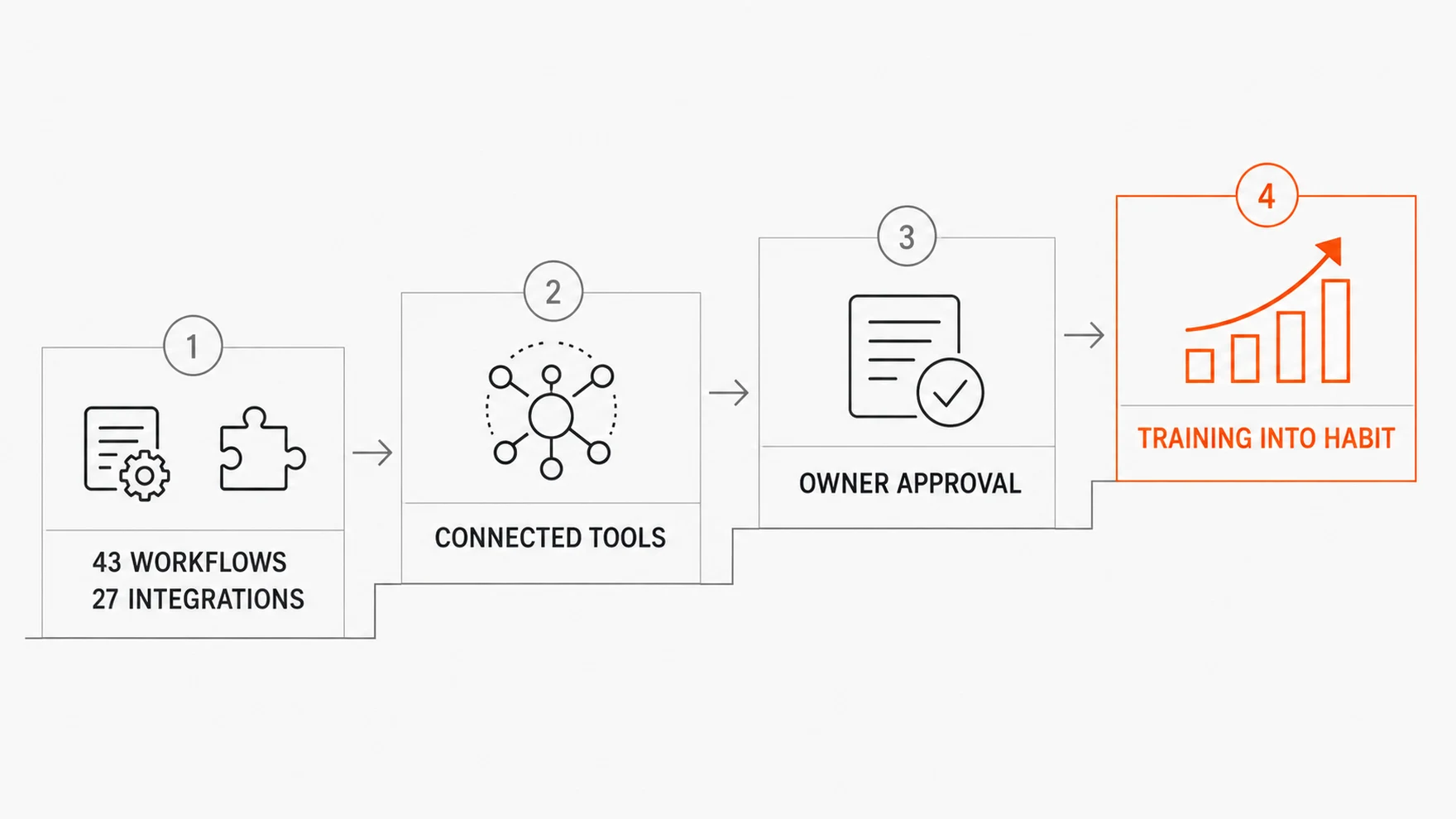
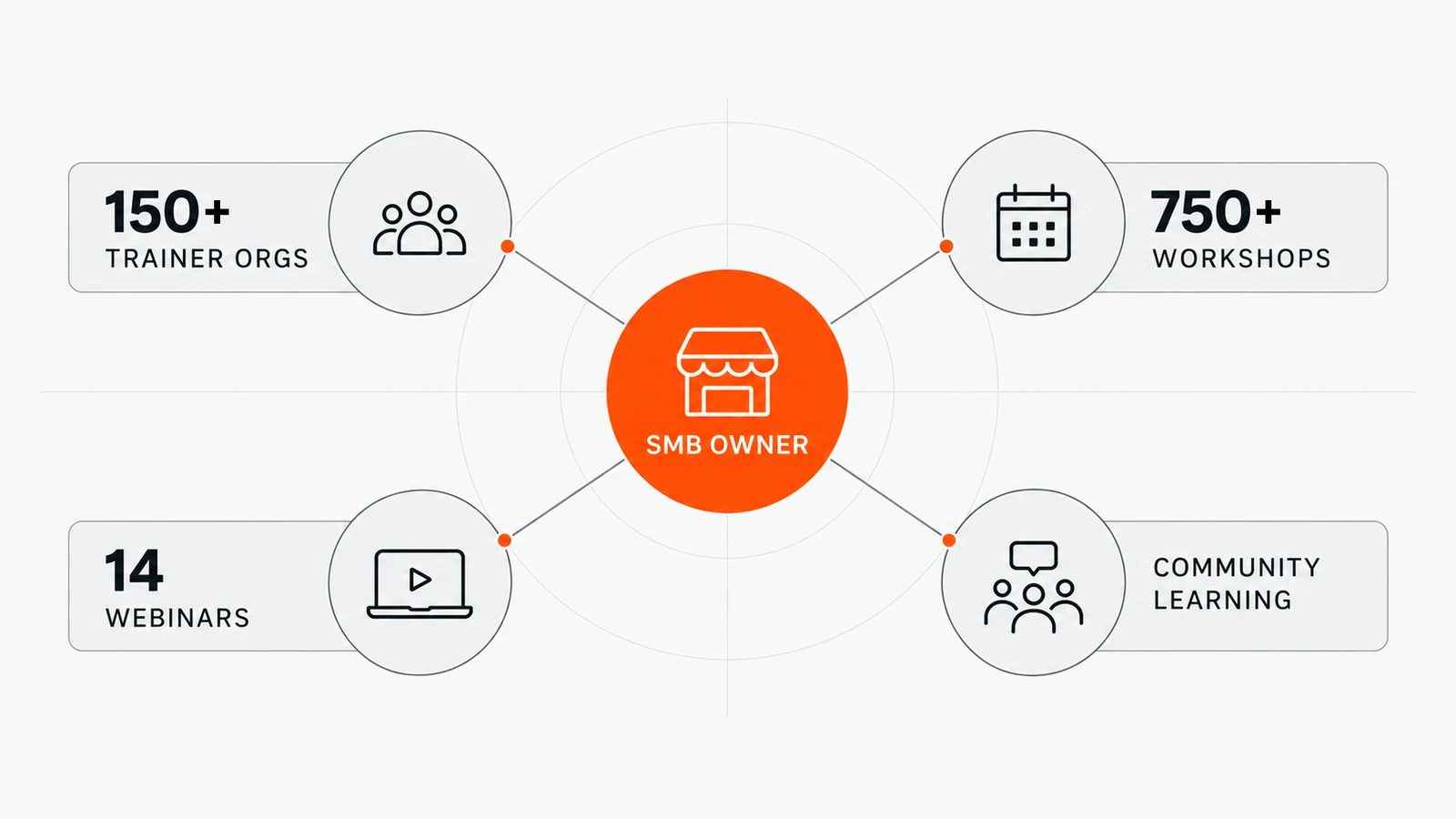
- ✓Anthropic's 15 September update says Claude for Small Business now includes 43 workflows and 27 new integrations. The more useful part is the adoption system around them: approval-first workflows, more than 150 approved trainer organisations, over 750 workshops and 14 partner webinars.
- ✓Workflows start in approval mode. Owners can enable autonomy for individual workflows. This concept covers when an agent should hand a decision to a person.
- ✓The 27 integrations are the connection layer. This concept explains how Claude reaches outside tools and what a permission boundary looks like.
- ✓Compare the certifications and their published domains before choosing a study path.
Open the 60-question CCA-F mock →
Claude for Small Business is not only a connector announcement. The lasting part of the release is the system around adoption: ready-made workflows, approval controls, local workshops, partner webinars and community training. The sessions offer owners help getting started.
The release bundles product and enablement
Anthropic says Claude for Small Business now includes 43 workflows and 27 new integrations with tools small businesses already use. The named tools span commerce, CRM, payroll, accounting, communications, advertising and automation. For a study exercise, start with a tool the business already uses.
Anthropic also says the product has been installed more than 900,000 times since it launched in May. That is an adoption signal. The more useful question is whether owners can move from installing it to using it safely, again and again. (Source: claude.com)
The control pattern is approval first
Every workflow starts in approval mode: Claude does the work and then waits for the owner's approval before anything sends, posts or pays. Owners can turn on more autonomy one workflow at a time. Some workflows stop before the final action on purpose: Claude stages payroll in Gusto, and the owner submits it. Existing software permissions still apply. If an employee cannot see something in QuickBooks or Google Drive today, they cannot see it through Claude either. Anthropic also says it does not train on business data on Team and Enterprise plans by default.
That is the working mechanism: connect the work, stage the action, keep the permission boundary, then let autonomy grow one workflow at a time. For study, identify the task boundary, tool access, approval decision and data handling.
Training is the missing middle
The training layer is concrete. Anthropic says more than 150 organisations have been trained as Approved Claude SMB Trainers, and they will run over 750 workshops in their communities. Train the Trainer events ran in San Francisco and New York City this summer. Half-day workshops follow this autumn in ten US cities, from Boston to Raleigh. Fourteen technology partners will each host a live webinar from late September through November. Anthropic is also building an applied-AI learning series with Goldman Sachs 10,000 Small Businesses.
Use the training programme as a study prompt: what would an owner need to learn before repeating a workflow?
What candidates should take from it
A useful study exercise: take one small-business workflow, such as a weekly finance brief or a lead follow-up, and write its adoption path in four lines. Which tools are connected? What output is staged? Who approves it? How is the owner trained? That exercise turns a product announcement into an implementation model.
Use the exercise to practise identifying connected tools, staged outputs, approval decisions and training needs.
3 direct routes into the scored material.
- conceptsWorkflows start in approval mode. Owners can enable autonomy for individual workflows. This concept covers when an agent should hand a decision to a person.
- conceptsThe 27 integrations are the connection layer. This concept explains how Claude reaches outside tools and what a permission boundary looks like.
- exam-guideCompare the certifications and their published domains before choosing a study path.
- claude.com· claude.com
Share this post.
One share is one less person stuck on the same question.